Welcome to Beyond Academe
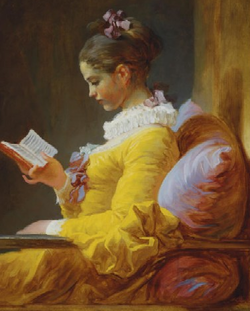
In 2004, the American Historical Association released a study on the career patterns of PhDs in history who had received their degrees between 1990 and 2004. Only 32% of these PhDs had obtained and currently held a position in a History Department.
Between 1990 and 2004, the majority of people who earned PhDs in history left academe.
Beyond Academe was created in 2003 to address this shift in the historical profession. The site seeks to educate historians about their options outside of academe. Beyond Academe also provides detailed assistance to historians who are looking for jobs outside of the academy and it seeks to encourage all historians to participate in the public sphere.
Believing that the historical profession suffers when it is defined narrowly, the creators of Beyond Academe actively encourage faculty members, history departments, and professional organizations to view the historical profession in broader terms.
A Mission to Change History
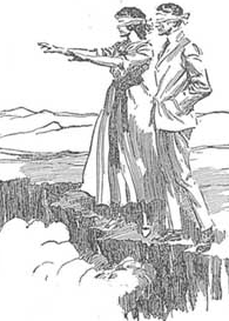
Don't make decisions blindly.
Today, the overwhelming number of graduate programs in history train historians to be professors. Period.
As graduate programs have pushed students toward careers in the academy, the academic job market has become tighter and tighter. More and more PhDs have found themselves adjuncting for years, all in the hopes of obtaining that coveted tenure-track job.
The tightening of the job market has led many to call for drastic cuts in graduate school admissions and the termination of some graduate programs.
Yet, even as we call for cuts in graduate programs, few historians have discussed the ways in which academically trained historians have turned away from the public arena---often to the detriment of the historical profession.
This failure to step outside the classroom has meant that those who practice history and hold jobs as historians in the public arena have often not been trained historians. Museum educators and even many curators often hold degrees in museum studies, not history. Similarly, preservationists often have degrees in preservation, not history. And journalists who often write history for the general public only rarely have advanced degrees in history. Obviously, many of these people are fantastic and very skilled historians but it is also not uncommon to discover inaccurate or even bad history being done in the public arena by people who lack a nuanced and in-depth understanding of history.
As graduate programs have pushed students toward careers in the academy, the academic job market has become tighter and tighter. More and more PhDs have found themselves adjuncting for years, all in the hopes of obtaining that coveted tenure-track job.
The tightening of the job market has led many to call for drastic cuts in graduate school admissions and the termination of some graduate programs.
Yet, even as we call for cuts in graduate programs, few historians have discussed the ways in which academically trained historians have turned away from the public arena---often to the detriment of the historical profession.
This failure to step outside the classroom has meant that those who practice history and hold jobs as historians in the public arena have often not been trained historians. Museum educators and even many curators often hold degrees in museum studies, not history. Similarly, preservationists often have degrees in preservation, not history. And journalists who often write history for the general public only rarely have advanced degrees in history. Obviously, many of these people are fantastic and very skilled historians but it is also not uncommon to discover inaccurate or even bad history being done in the public arena by people who lack a nuanced and in-depth understanding of history.
Is this site just for historians?
We recognize that the overproduction and under-utilization of PhDs is endemic in America and that little has been done by graduate schools and professional organizations to address this problem. While we think it would be great if we could provide suggestions and advice for everyone with a PhD, we also recognize our limitations.
In creating this website, we have tried to give very specific advice-tailored for historians of all types. We think this site can be used by PhDs in other fields but you will find that much of the information we provide is intended specifically for historians.
How should this site be used?
This site is intended to be read and used over a period of time. Because there is a great deal of material here, we suggest that you begin slowly by looking at the parts of the site which are most relevant to your current situation. If you are beginning a job search or just starting to think about leaving academia, you may want to read the site in its entirety but you will then need to return at different intervals to read and think about specific parts of the site. We recommend reading the Overview Sections, i.e Exploring Your Options (Overview), when you first visit the site.
Exploring Your Options is an introduction to the idea of a non-academic job search. Seeking a Job includes detailed information about how to find and apply for jobs at organizations which hire historians (museums, the federal government, historical consulting firms etc.). Real Jobs, Real Historians includes profiles of historians who have left academe; we have tried when possible to update these profiles. This section includes profiles of some of the most dynamic and well-known historians who have left academe as well as profiles of fictional characters whose stories of leaving academe are documented in novels. It also includes sample profiles which illustrate how historians should think about their transition. All of our profiles are intended to provide inspiration and to illustrate the diversity of careers open to historians. Future, Past and Present steers you to workshops, seminars, list-serves, organizations, and conferences which can make you a better public historian. It also provides some general information about the history of Beyond Academe (after all, we are historians!).
Note on the Creators of Beyond Academe:
The creators of this site (Alexandra Lord and Julie Taddeo) both possess PhDs in history. Lexi left academia after four years of teaching and Julie left after six years of teaching; she has since returned to teaching.
Since 2006, this site has been updated and maintained by Lexi Lord. If you have any questions about the site, please direct them to her at beyondacademe@yahoo.com
This site was most recently updated in September 2012. The site is updated roughly every six months or so to ensure that links still work, that conference information is correct and that any new information is added to the site.
Alexandra M. Lord
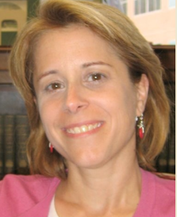
Who I Am and Areas of Expertise
My graduate training was in early modern British medical history, specifically the history of gynecology in eighteenth-century Scotland and England. I have published as well as given papers on topics ranging from early medical theories of menstruation and medical fraud (Munchausen's Syndrome) to the history of epidemiology and the influenza pandemic of 1918-1919 and the development of federally funded sex education campaigns during the twentieth century.
My most recent project was a book on the history of federally funded sex education in the United States, Condom Nation: The US Government's Sex Education Campaign from World War I to the Internet (Johns Hopkins University Press, 2010).
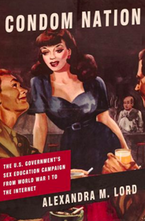 Sex and all that... |
 Check out The Ultimate History Project.
Click here to learn more about the book or, better yet, click here to buy it from Amazon! Currently, I am working, although slowly, on a novel which draws on my understanding of both Scottish history and the history of eighteenth-century medicine. In addition to Beyond Academe, I also run a website called The Ultimate History Project; this features articles written by professional historians on a range of topics intended for the general public (I believe strongly in public history!). The site is aimed at a general audience and updated twice a week; check it out and consider writing a piece! My 9-5 job entails working for the National Park Service. |
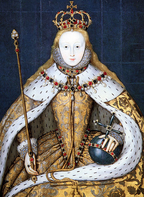
...the clothes were fantastic
Why I Became a Historian
As a child, I read mainly British books (everything from Enid Blyton to E. Nesbit) and my father, an anglophile, loved to take us to see British films and plays. My favorite paper dolls included a set of Henry VIII's wives (yes, really!) and I wanted to be Elizabeth I.
In college, I combined my love of history with my second love, art history, and did an inter-disciplinary major. After college, I worked at The Walters Art Museum in Baltimore (during college, I had an internship at the Metropolitan Museum of Art). Gradually I realized that while I was still passionate about art, I wanted to be a historian first and foremost.
I went to The University of Wisconsin at Madison for my doctorate because I was especially interested in medical history (having studied under Anthony Wohl at Vassar, a great British medical historian). I completed my doctorate in six years; my dissertation explored the rise of the man-midwife in Scotland and England during the long eighteenth century.
As a child, I read mainly British books (everything from Enid Blyton to E. Nesbit) and my father, an anglophile, loved to take us to see British films and plays. My favorite paper dolls included a set of Henry VIII's wives (yes, really!) and I wanted to be Elizabeth I.
In college, I combined my love of history with my second love, art history, and did an inter-disciplinary major. After college, I worked at The Walters Art Museum in Baltimore (during college, I had an internship at the Metropolitan Museum of Art). Gradually I realized that while I was still passionate about art, I wanted to be a historian first and foremost.
I went to The University of Wisconsin at Madison for my doctorate because I was especially interested in medical history (having studied under Anthony Wohl at Vassar, a great British medical historian). I completed my doctorate in six years; my dissertation explored the rise of the man-midwife in Scotland and England during the long eighteenth century.
Leaving Academe
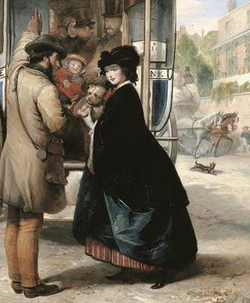
Taking the omnibus to a new job
In 2000, after two years teaching in a tenure-track position and two years as a visiting professor, I decided to leave academia.
Since then, I have worked as a federal historian. Working as a federal historian has led me to develop new skills and, most importantly, to explain the importance of history to legislators, reporters, and the general public.
If you want to read the longer version of my career trajectory, you can click here to read this pdf. But you can also read the very interesting stories of other people who left academe on the section entitled "Real Jobs, Real Historians" and the section entitled "Creative Thinkers." Every person who leaves academe has his or her unique reasons for leaving academe and his or her unique story.
If you want to read some thoughts on switching fields, click here.
Top Five Reasons to Leave Academia
Location, Location, Location: I am finally living in the city of my choice.
Ability to Have a Wider Impact: On a daily basis, I show Congressional legislators, reporters, and the general public why history is important.
Money: The higher salary which came with leaving academia has enabled me to travel, to give money to charities, to repay my student loans, and, yes, to buy more books. I'll also be frank and admit that I have enjoyed being able to shop at places like Ann Taylor.
Good Health Insurance: A few years ago, I developed a serious stress fracture while completing a marathon. I also developed a distorted sense of smell for no discernible reason. While there is nothing more exciting for a medical historian than to become a famous case study, I cannot imagine what would have happened if I had had no or limited health insurance.
Opportunity to Pursue Varied Interests: Academia favors the narrowly focused specialist. Outside of academia, I am free to explore a range of topics and because my 9-5 job is clearly demarcated from my personal time, I am able to pursue and do whatever I please in my private life. In short, I feel I have a richer and more fulfilling professional and personal life since leaving academia.
Why I Created Beyond Academe
I created Beyond Academe because I was deeply concerned about the narrow ways in which our profession is defined. Beyond Academe also grew out of my desire to assist historians who are looking for work. Having been unemployed and having struggled on my own to find a job which I would enjoy and which would enable me both to live where I wanted and to support myself, I wanted, very much, to help people who are dealing with these issues as they look for a job.
In recent years, I have also been dismayed by the growing numbers of people who assert that a PhD is a “vocational degree” which should lead one in only direction---back into the academy. Graduate school is simply about taking several years to study history and to grow intellectually.
How you decide to use your education is up to you.
Since then, I have worked as a federal historian. Working as a federal historian has led me to develop new skills and, most importantly, to explain the importance of history to legislators, reporters, and the general public.
If you want to read the longer version of my career trajectory, you can click here to read this pdf. But you can also read the very interesting stories of other people who left academe on the section entitled "Real Jobs, Real Historians" and the section entitled "Creative Thinkers." Every person who leaves academe has his or her unique reasons for leaving academe and his or her unique story.
If you want to read some thoughts on switching fields, click here.
Top Five Reasons to Leave Academia
Location, Location, Location: I am finally living in the city of my choice.
Ability to Have a Wider Impact: On a daily basis, I show Congressional legislators, reporters, and the general public why history is important.
Money: The higher salary which came with leaving academia has enabled me to travel, to give money to charities, to repay my student loans, and, yes, to buy more books. I'll also be frank and admit that I have enjoyed being able to shop at places like Ann Taylor.
Good Health Insurance: A few years ago, I developed a serious stress fracture while completing a marathon. I also developed a distorted sense of smell for no discernible reason. While there is nothing more exciting for a medical historian than to become a famous case study, I cannot imagine what would have happened if I had had no or limited health insurance.
Opportunity to Pursue Varied Interests: Academia favors the narrowly focused specialist. Outside of academia, I am free to explore a range of topics and because my 9-5 job is clearly demarcated from my personal time, I am able to pursue and do whatever I please in my private life. In short, I feel I have a richer and more fulfilling professional and personal life since leaving academia.
Why I Created Beyond Academe
I created Beyond Academe because I was deeply concerned about the narrow ways in which our profession is defined. Beyond Academe also grew out of my desire to assist historians who are looking for work. Having been unemployed and having struggled on my own to find a job which I would enjoy and which would enable me both to live where I wanted and to support myself, I wanted, very much, to help people who are dealing with these issues as they look for a job.
In recent years, I have also been dismayed by the growing numbers of people who assert that a PhD is a “vocational degree” which should lead one in only direction---back into the academy. Graduate school is simply about taking several years to study history and to grow intellectually.
How you decide to use your education is up to you.
Some Final Thoughts and a Request
This would not be a labor of love.
Beyond Academe is a labor of love for me. I genuinely love history and I strongly feel that an education in history can open new doors for people---but I am concerned that too few historians understand their options in this regard.
I don’t think a career in academia is the “wrong” choice or that academia is a “bad place.” I think remaining in academia is a great choice for many people!
Beyond Academe’s mission is simply to ensure that people who decide to remain in academia, or people who decide to leave academia, do so based on an understanding of all of their options. Beyond Academe also seeks to assist historians, especially those still in graduate school, to expand their horizons and to acquire skills which will enable them to work in a museum, to write a book aimed at a broad public, to assist in preservation efforts---in short, to work in a range of fields which require a knowledge of history. Whether a historian remains in the academy or leaves the academy, he or she should possess an understanding of these diverse fields.
Beyond Academe is a volunteer activity for me. I don’t accept ads or sponsors on the site because I am concerned that ads and/or sponsors will indirectly influence people’s understanding of their options.
Because Beyond Academe is done at my expense, I ask that you respect the site. I am very happy to provide permission to people interested in posting information from Beyond Academe on their sites and I am happy to answer any questions site visitors may have about Beyond Academe or any of the information listed here. If you do intend to use parts of Beyond Academe on your own site, please credit Beyond Academe.
Knowing how Beyond Academe is used and who uses it in different places is very helpful to me as I think about adding to and improving the site. Thank you.
How You Can Change History
If our profession is to adopt a broader and deeper understanding of not only what it means to be an historian but also how historians use their skills and knowledge in a range of careers, we must participate in ongoing discussions about the future of the historical profession.
Please ensure that your voice is heard by attending historical conferences and participating on committees associated with the leading historical organizations whenever possible. Volunteer to speak at your alma mater.
The National Council on Public History is one of the most welcoming organizations for historians who have followed a non-traditional path. Historians who are active in NCPH include experts in both American and non-American history. Their annual conference brings together people in an incredible range of professions. Conference organizers have also worked hard to ensure that historians in different professions communicate with one another through a range of innovative networking programs.
Acknowledgements
In creating and updating this site, I spoke to and learned from an extraordinary number of people both in and outside of academia. Several people were especially helpful: Laura Ettinger, Anne Whisnant, Jeffrey Reznick, John Swann, Victoria Harden, Paula Foster Chambers, Darryl Stevens, Themie Pantazis, Hadass Sheffer, Michelle McClellan, John Dichtl, Stephanie Masaro, and Marla Miller.
My husband, Benjamin L. Apt, also deserves a special thanks. A lawyer with two master's degrees, he has been tremendously supportive of Beyond Academe. He has also often steered me toward PhDs who have left the academy, including three members of his own immediate family, (his father, Charles Apt, his uncle, Victor Wouk, and his brother, Adam Apt).
Finally, my mother, Athena Lord, has done an amazing job finding PhDs outside the academy. If I were to judge by her experiences, every third person in America is a non-academic PhD.
This site has been endorsed by The Woodrow Wilson National Fellowship Foundation. The Woodrow Wilson National Fellowship Foundation increased awareness of the value of humanities training and education to society at large, and in so doing, expanded career opportunities for PhDs both inside and outside the academy. We are pleased to receive this endorsement.
This site has been commended by the Organization of American Historians.
This site was created as a free service to the historical profession. If you would like to use excerpts from this site elsewhere or post information from this site on your website, please contact Lexi Lord at beyondacademe@yahoo.com for permission. Thank you.
If you would like information about any of the images used on this site, please contact Lexi Lord at beyondacademe@yahoo.com.
